
Urology
Renal Stone (Kidney Stone)
Hard mineral and salt deposits that form inside the kidneys and can affect any part of the urinary tract.
Overview
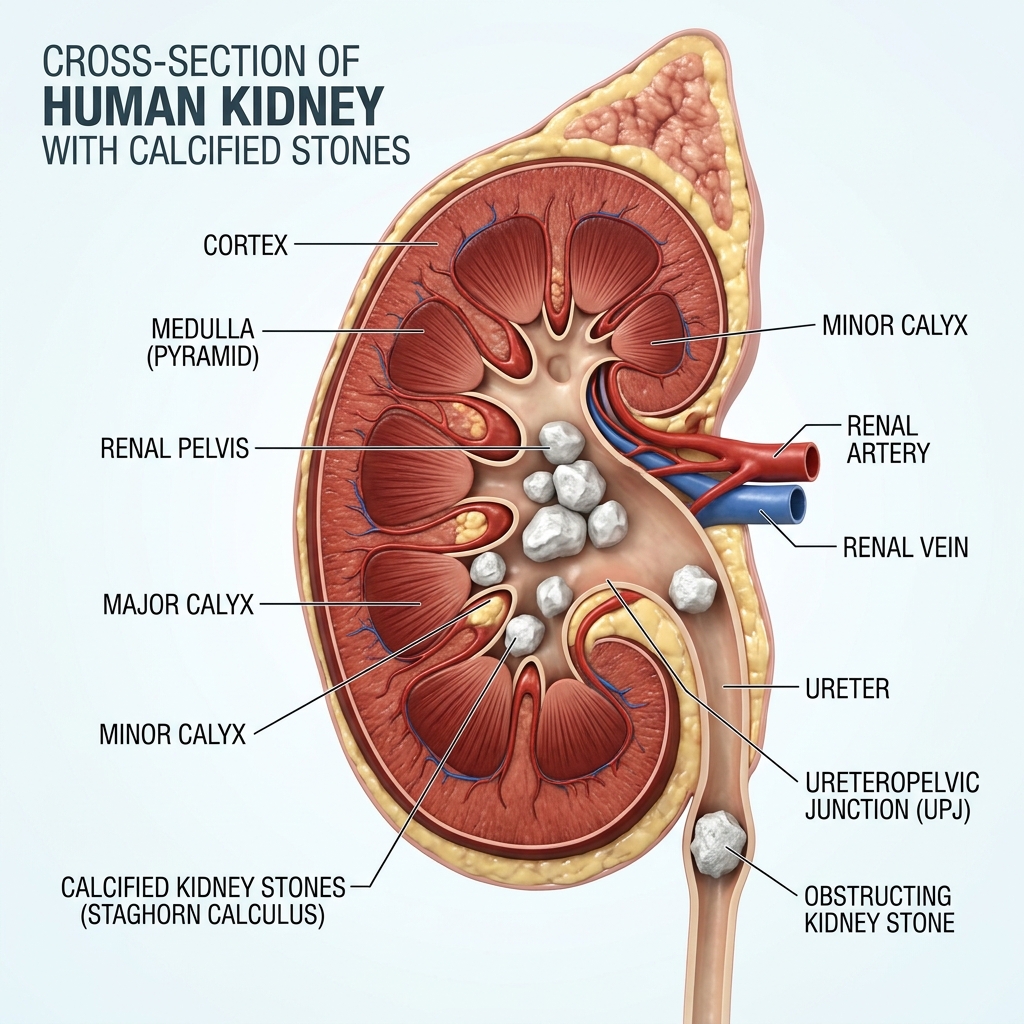
Renal stones, also known as kidney stones or nephrolithiasis, are hard deposits made of minerals and salts that form inside the kidneys. These stones can affect any part of the urinary tract, from the kidneys to the bladder.
Kidney stones vary in size and shape. Some pass through the urinary tract without symptoms, while others cause severe pain and complications that need prompt review.
Causes & triggers
- Dehydration, which concentrates minerals in the urine
- Diets high in sodium, sugar, protein or oxalate-rich foods
- Medical conditions: hyperparathyroidism, gout, urinary infections, diabetes, obesity
- Family history and genetic predisposition
- Certain medications and supplements, including high-dose vitamin D
Common symptoms
- Severe, cramping pain in the back and side below the ribs, radiating to the lower abdomen and groin
- Hematuria — pink, red or brown urine
- Nausea and vomiting caused by the intense pain
- Frequent urination or passing small amounts often
- Cloudy or foul-smelling urine
- Fever and chills, which may signal infection
Prevention & self-care
- Drink enough water to keep urine pale through the day
- Reduce salt and animal protein; do not cut calcium without advice
- Moderate oxalate-rich foods such as spinach and nuts
- Repeat imaging as advised if you have had stones before
When to see a doctor
Seek immediate care for pain with fever and chills, inability to pass urine, or pain so severe you cannot sit still.
Book a consultation