Psoriasis
A chronic immune-driven disease where skin cells multiply too quickly, forming scaly, inflamed patches.
Overview
Psoriasis is a chronic, long-lasting disease in which the immune system becomes overactive, causing skin cells to multiply too quickly. Patches of skin become scaly and inflamed, most often on the scalp, elbows or knees, though other parts of the body can be affected. It involves a mix of genetics and environmental factors.
Symptoms go through cycles, flaring for a few weeks or months and then subsiding or entering remission. Managing common triggers such as stress and skin injuries helps keep symptoms under control.
Psoriasis carries a risk of other serious conditions, including psoriatic arthritis, cardiovascular events, and mental health problems such as low self-esteem, anxiety and depression.
Types & stages
- Plaque psoriasis
- The most common kind — raised, red patches covered by silvery-white scales, often on scalp, trunk, elbows and knees.
- Guttate psoriasis
- Small red dots on the torso or limbs, usually in children or young adults, often triggered by a throat infection.
- Pustular psoriasis
- Pus-filled bumps surrounded by red skin, usually affecting the hands and feet.
- Inverse psoriasis
- Smooth, red patches in skin folds such as beneath the breasts, groin or armpits; worsened by rubbing and sweating.
- Erythrodermic psoriasis
- A rare but severe form with red, scaly skin over most of the body; can be very serious.
Common symptoms
- Patches of thick, red skin with silvery-white scales that itch or burn
- Dry, cracked skin that itches or bleeds
- Thick, ridged, pitted nails
- Poor sleep quality
- Stiff, swollen or painful joints if psoriatic arthritis develops
Prevention & self-care
- Moisturise daily to protect the skin barrier
- Avoid skin injury, harsh scrubbing and sunburn
- Track flare triggers such as stress and infections
- Limit alcohol and smoking, both of which worsen flares
When to see a doctor
See a clinician promptly for joint pain and swelling with psoriasis, or for widespread redness and scaling with fever or chills.
Book a consultationRelated conditions
Hair Fall
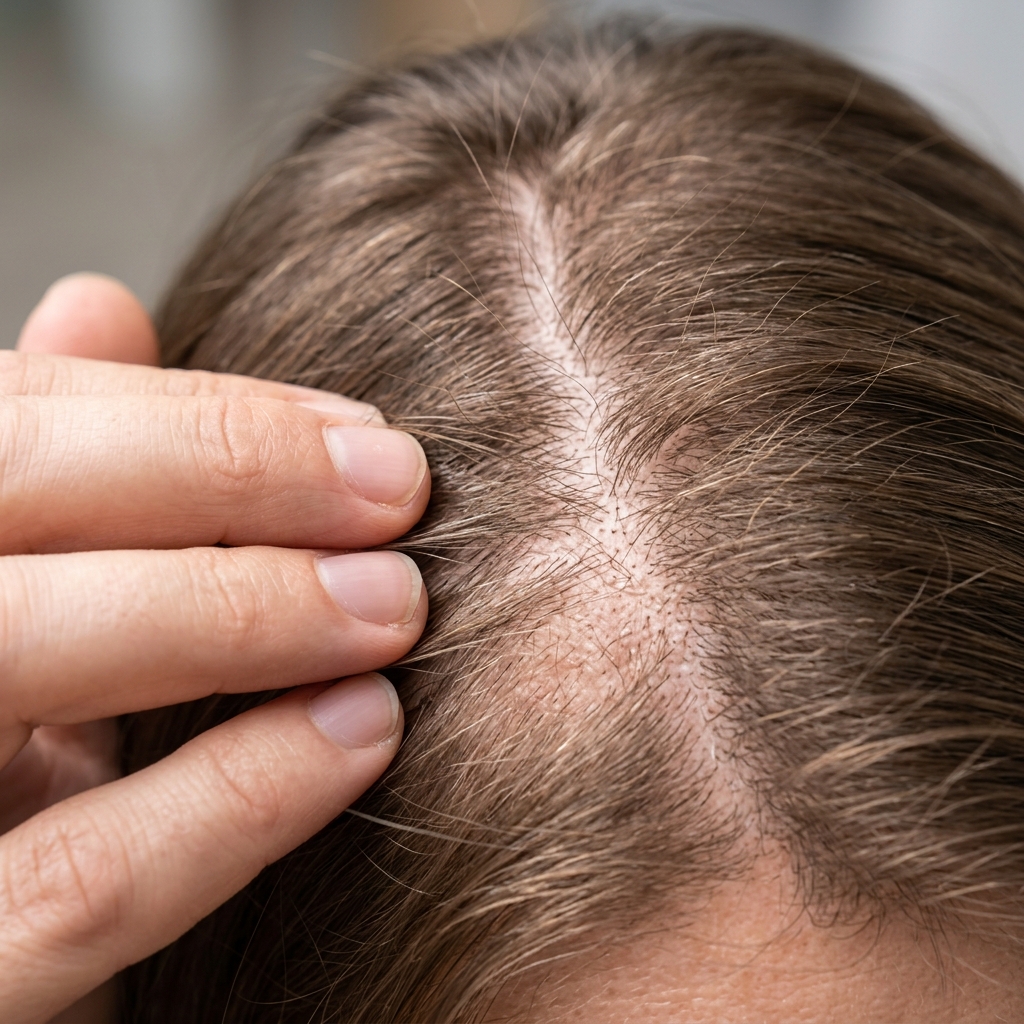
Hair loss (alopecia) affecting millions, driven by genetics, hormones, nutrition, stress and scalp health.
Eczema (Atopic Dermatitis)
A chronic condition causing dry, itchy and inflamed skin, common in young children but possible at any age.

Vitiligo
A skin condition where the immune system destroys pigment cells, leaving lighter or white macules and patches.